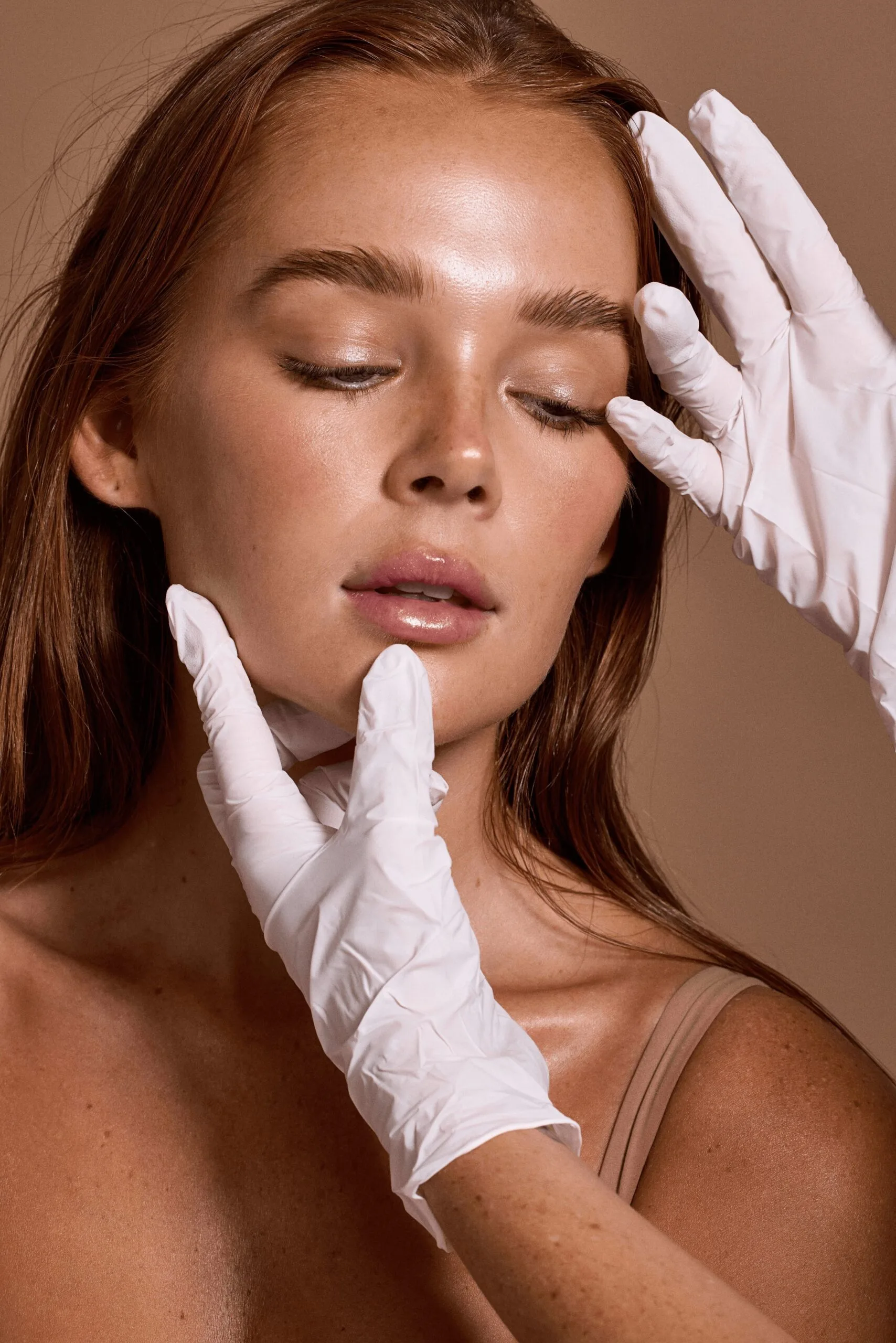
What the salmon sperm facial actually is, what the research genuinely supports, and why we deliver polynucleotides the way we do.
Very few treatments have arrived with a nickname this unfortunate. The salmon sperm facial has been through every corner of the internet in the past two years, usually attached to a celebrity, a dramatic before and after, and very little explanation of what is actually happening to the skin.
It is a real treatment with real research behind it. It is also one of the areas where marketing has run considerably further than the evidence, so this is our attempt to set out what is known, what is promising, and what is simply being oversold.
What is a salmon sperm facial, really?
The clinical name is polynucleotides, sometimes shortened to PDRN, which stands for polydeoxyribonucleotide. It is purified DNA, broken into fragments of a standardised length and refined to a pharmaceutical grade.
The DNA is most commonly sourced from salmon or trout. That is where the nickname comes from, and it is not inaccurate, but it does make the treatment sound considerably less rigorous than it is. What ends up in your skin is a purified, sterile, standardised molecule. It bears about as much resemblance to its raw material as a prescription medicine does to the plant it was originally derived from.
How do they get salmon sperm for skin treatments?
The DNA is extracted from salmon or trout milt, then purified, filtered and sterilised to strip out protein and cellular material. What remains is fragmented to a consistent length, because fragment length is one of the variables the research is built on.
Salmon DNA is used for two practical reasons. Its structure is close enough to human DNA to be well tolerated, and it is a reliable, traceable byproduct of an existing food industry. It is not exotic, and it is not new. PDRN has been used in wound healing medicine for considerably longer than it has been on any aesthetics menu.
Is salmon sperm good for your skin, or is it hype?
Both, depending on which claim you are looking at. The salmon sperm facial is not a con, but it is not the miracle the reels suggest either.
The mechanism is genuinely well described. PDRN acts on adenosine A2A receptors, which reduces inflammatory signalling and supports the formation of new blood vessels. Better vascular supply and less background inflammation is a reasonable foundation for skin that behaves better, holds hydration and repairs more efficiently. That part is not marketing.
Where it overreaches is in the promises. Single session transformation. Replacing volume. Standing in for treatments that work by an entirely different mechanism. We are comfortable saying polynucleotides support hydration, calm and skin quality across a course of treatment. We are not comfortable promising more than that, and we would be cautious of anyone who is.
Why we deliver salmon sperm with skin needling
This is the part most articles skip, and it is the part that matters most if you are deciding where to have it done.
At Plump, in our South Yarra clinic in Melbourne, polynucleotides are not a standalone treatment. We deliver them as a booster infusion during skin needling, and that is a deliberate decision rather than a limitation.
Skin needling creates controlled micro-channels through the epidermis and into the dermis, which triggers a genuine wound healing cascade: inflammation, then fibroblast activation and new collagen, then months of remodelling. Polynucleotides work on that same healing process. Delivering them into skin that has just been asked to repair itself puts the ingredient where the biology is already active, rather than into skin that has no particular reason to respond.
The two are working on the same mechanism from different directions. Pairing them is the point.
Is a salmon sperm facial safe?
In trained hands, with sterile technique and proper assessment beforehand, it is well tolerated. The common experiences are short lived redness, small raised areas where product has been placed, and some tenderness for a day or two.
As with anything that breaches the skin barrier, the risks that genuinely matter are infection and poor technique. Which is why the practitioner, the assessment and the environment matter considerably more than the product on the shelf. If you have a known allergy to fish, tell us at consultation.
What about before and afters?
Be careful with them. The mechanism here is regenerative, which means the meaningful change arrives through the collagen remodelling window rather than the following morning. A dramatic overnight comparison is telling you about lighting, hydration and photography, not about collagen.
What is realistic: early hydration and a calmer, less reactive skin within a fortnight, with the structural change becoming visible across the months that follow. We review you along the way rather than leaving you to judge it alone in your bathroom mirror.
How many treatments, and what does it cost?
This is a course rather than a single event. Most people see the change that matters across a series, with maintenance afterwards to hold it.
Because the number of sessions depends on your skin, your concern and where you are starting from, we price and plan it after assessment rather than quoting a single figure to everybody. If budget is a consideration, please say so. It changes what we recommend, not whether we help.
Who it is not for
There are people we would not treat, or would ask to wait. Active skin infection or inflammatory flare in the area. Known fish allergy. Certain medications and medical histories. Pregnancy and breastfeeding, which we assess case by case, and where we will always tell you plainly if something is better postponed.
Suitability is decided at consultation, properly, and not by a form you fill in on the day.
Frequently asked questions
Is a salmon sperm facial actually sperm?
No. It is purified DNA extracted from salmon or trout milt, then filtered, sterilised and fragmented to a standardised length. The clinical name is polynucleotides, or PDRN. What reaches your skin is a pharmaceutical grade molecule, not the raw material the nickname suggests.
How much does a salmon sperm facial cost?
We do not publish a single figure. The number of sessions depends on your skin, your concern and where you are starting from, so we price and plan the course after assessing you. If budget is a consideration, say so. It changes what we recommend, not whether we help.
How long does a salmon sperm facial last?
It works as a course rather than a single event. Hydration and a calmer, less reactive skin typically show within a fortnight, with structural change developing across the months of collagen remodelling that follow. Maintenance afterwards holds it, and we review you along the way.
What are the benefits of a salmon sperm facial?
The mechanism is well described. PDRN acts on adenosine A2A receptors, which reduces inflammatory signalling and supports the formation of new blood vessels. We are comfortable saying it supports hydration, calm and skin quality across a course of treatment. We are not comfortable promising more than that.
Where can I get a salmon sperm facial in Melbourne?
At Plump in South Yarra. We deliver polynucleotides as a booster infusion during skin needling rather than as a standalone facial, because needling has already activated the repair process the ingredient works on. Suitability is decided at a consultation beforehand, not on the day.
Read next
The full skin needling page. How the treatment works mechanically and biologically, our two levels, the complete booster menu with the evidence for each, what we will not do, aftercare, and how the course is structured.
Collagen and ageing skin. Where regenerative treatments sit alongside everything else, and how we sequence them rather than stacking them.
New to skin treatments. If this is your first step, start here instead.
Book a complimentary skin consultation
Every plan at Plump begins with a proper consultation. We assess your skin, discuss your history, medications and lifestyle, explain what we believe is worth treating and in what order, and set realistic timelines before anything begins.
There is no cost and no obligation to proceed.
Book online, or call or text 0478 844 048.
Plump Aesthetic Clinic, 525 Chapel Street, South Yarra
Results vary between individuals and depend on skin type, skin condition, underlying contributing factors, home care and the plan followed. No result is guaranteed. All treatments carry risks, which will be explained in full before you proceed. This information is general in nature and is not a substitute for individual medical advice.