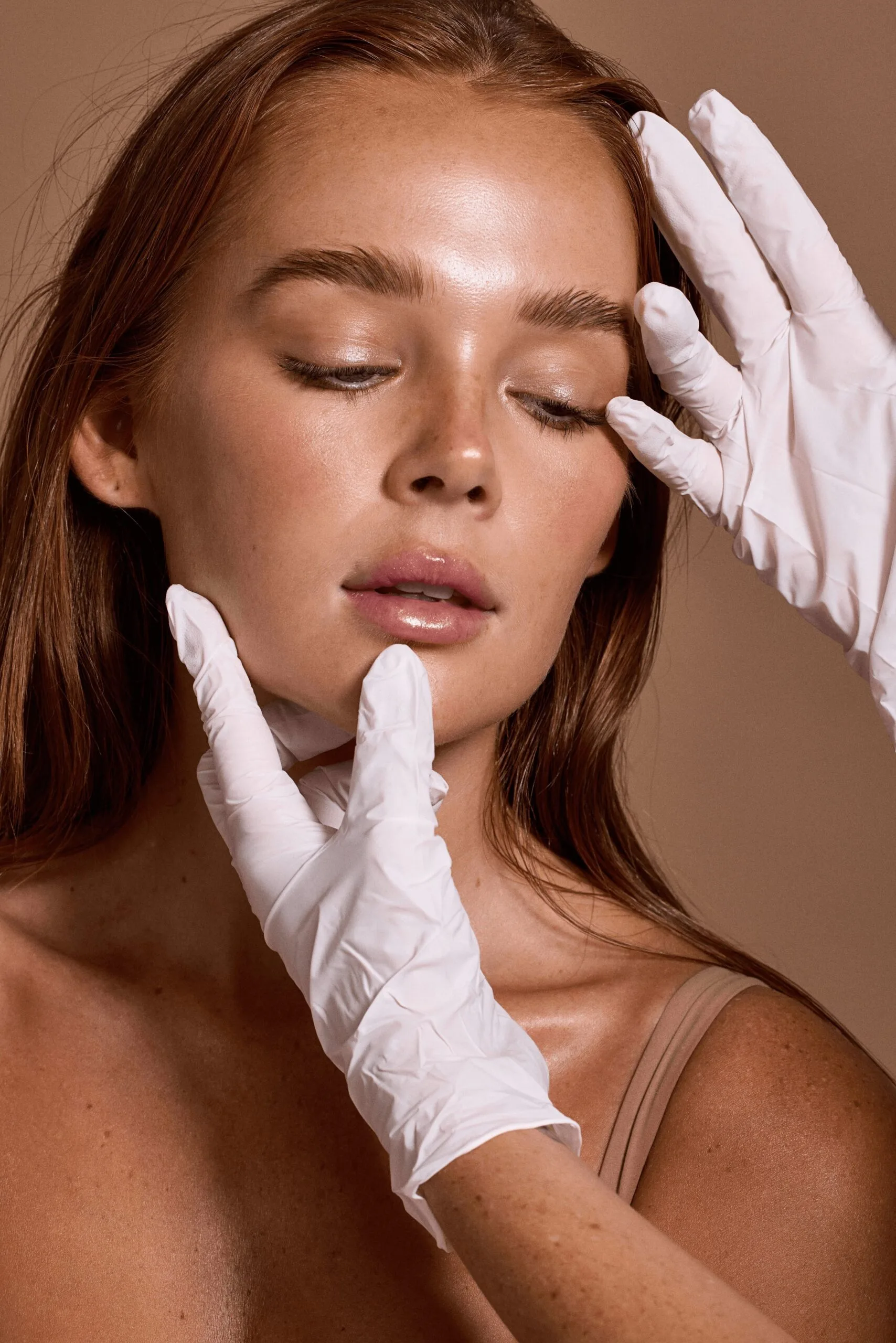
How Your Plump IPL Treatment Works
Every Plump IPL treatment begins with a comprehensive skin consultation and assessment. Your clinician will assess your skin, discuss your concerns and goals, review your current skincare and determine whether IPL is appropriate for your skin on the day.
Your skin is analysed using our Wood's Lamp and MagniLamp to assess pigmentation, vascular changes, hydration and overall skin condition. This allows us to understand what is happening within your skin and customise your treatment accordingly.
Once your skin has been assessed and prepared, our medical-grade M22 IPL XPL is used to deliver precisely controlled pulses of light into the skin.
Rather than using one technique across every treatment, we combine Glide Mode in Motion technology with targeted stamping, depending on your skin and the concern being treated.
Glide Mode in Motion delivers controlled light energy continuously across the treatment area, allowing us to treat larger areas evenly and efficiently. This technique is particularly useful when treating concerns such as overall redness, diffuse pigmentation and skin rejuvenation.
Targeted stamping delivers individual, precisely controlled pulses to specific areas of concern. This allows your clinician to focus energy where it is needed most, such as discrete pigmentation, visible vessels or targeted areas of inflammation.
Your clinician may use either technique individually or combine both within the same treatment to achieve a more tailored result.
Different wavelengths of light are selectively absorbed by specific targets within the skin, including melanin, haemoglobin and acne-associated bacteria.
For pigmentation, light energy is absorbed by excess melanin, helping to break down unwanted pigment so it can gradually clear from the skin.
For vascular concerns, light is absorbed by haemoglobin within superficial blood vessels, helping to reduce the appearance of redness and visible vessels.
For inflammatory acne, precisely controlled wavelengths interact with acne-associated bacteria and inflammation, while deeper-penetrating wavelengths can target the sebaceous glands to help reduce excess oil production.
By combining the right wavelength, treatment technique and energy delivery for your skin, we can customise IPL to your individual concerns rather than taking a one-size-fits-all approach.
As your skin responds and renews, the complexion can become progressively clearer, brighter, more even and refined.
What Can IPL Treat?
Plump IPL can be customised to address a range of concerns, including:
- Pigmentation and brown spots
- Freckles
- Sun damage
- Uneven skin tone
- Acne
- Facial redness
- Port wine stains
- Cherry angiomas
- Visible superficial vessels
- Rosacea
- Post-inflammatory acne redness
- Overall skin rejuvenation
Treatment Benefits
Depending on your individual treatment plan, IPL may help to:
- Reduce the appearance of pigmentation and sun damage
- Improve uneven skin tone
- Reduce redness and visible vessels
- Reduce & clear acne
- Brighten a dull complexion
- Improve overall skin clarity
- Create a more even, refined appearance
- Support long-term skin health and maintenance
Recovery
Recovery varies depending on what is being treated and the intensity of the treatment.
Following IPL, it is normal to experience temporary warmth, redness or very mild swelling. Pigmented areas may initially appear darker before gradually becoming lighter and clearing over the following days.
Most patients can return to normal activities shortly after treatment, although your clinician will provide individualised aftercare based on your treatment response.
Strict daily SPF is essential following IPL treatment.
Combining Treatments
For a comprehensive skin rejuvenation program, M22 IPL may be combined with other treatments where clinically appropriate, including:
- Chemical peels
- LED light therapy
- Microneedling
- CO2 (coming soon)
- Personalised home skincare
Your treatment plan will be tailored to your skin's needs and designed to achieve progressive, natural-looking improvements.
Treatment & Safety
IPL is a highly customisable treatment, but it is not a one-size-fits-all procedure. The appropriate wavelength, energy and treatment settings are selected according to your skin type, concern and clinical presentation.
A mandatory patch test is performed in your consultation before treatment to assess your skin's response and help determine appropriate treatment parameters. Your clinician will also provide specific pre- and post-treatment instructions to minimise the risk of unwanted reactions and optimise your results.
For deeper skin tones, additional caution and preparation may be required due to the increased risk of post-inflammatory pigmentation. Your clinician will assess your suitability and determine the safest treatment approach during your consultation.
Why Plump IPL?
We don't treat IPL as a one-size-fits-all treatment.
Your skin comes first. Every treatment is selected and customised based on your skin type, concerns, current skin condition and treatment goals. Where appropriate, IPL can form part of a broader Plump skin health plan, alongside professional treatments and personalised home care.
The goal isn't simply to treat a concern. It's to improve the overall health, clarity and quality of your skin.
Frequently Asked Questions
Is IPL painful?
Most patients describe IPL as a warm snapping or flicking sensation. The level of discomfort varies depending on the treatment area and individual sensitivity. Your clinician will ensure you are as comfortable as possible throughout the treatment.
Will I peel after IPL?
IPL is not a traditional exfoliating treatment, so peeling is not expected in the same way it may be following a chemical peel. Pigmented areas may temporarily darken or appear more noticeable before naturally clearing from the skin.
Can I have IPL if I have darker skin?
IPL can be suitable for some deeper skin tones, but it requires careful clinical assessment and treatment planning. Darker skin contains more melanin, which means there is a greater risk that IPL energy is absorbed by the surrounding skin rather than the intended target.
For this reason, treatment settings, preparation and suitability must be carefully considered. A patch test is required before treatment.
How many IPL treatments will I need?
This depends on what we're treating and how your skin responds. Some concerns may improve following an initial course of 3 to 4 treatments, while stubborn acne may require more.
Your clinician will recommend the most appropriate treatment schedule based on your skin and goals.
Can IPL treat both pigmentation and redness?
Yes. IPL can be customised to target different chromophores within the skin, including melanin associated with pigmentation and haemoglobin associated with vascular redness.
Where clinically appropriate, both concerns can be addressed as part of an individualised treatment plan.
Can I have IPL before an event?
IPL can create a brighter, more even complexion, but treatment timing is important. Pigmentation can temporarily darken following treatment and redness or swelling may occur, so we recommend allowing adequate recovery time before an important event.
Your clinician can help determine the most appropriate treatment and timing based on your event date and skin concerns.
Is IPL the same as laser?
No. IPL and laser are both light-based technologies, but they work differently. IPL uses a broad spectrum of light, while laser treatments use a specific wavelength.
The M22 IPL XPL allows us to customise treatment according to the target we are treating, making it particularly useful for concerns such as pigmentation, redness and overall skin tone.
What should I avoid after IPL?
Your clinician will provide personalised aftercare, but protecting your skin from UV exposure is particularly important. Daily broad-spectrum SPF should be used, and you may be advised to temporarily avoid heat, intense exercise, active skincare ingredients and other treatments depending on your treatment response.
Is IPL safe?
IPL can be performed safely when the correct patient selection, treatment parameters and clinical protocols are followed. Your consultation and patch test are an important part of this process.
We take a skin-first approach rather than using a standardised setting for every patient. Your treatment is selected according to your skin type, concerns and individual response.
Book a complimentary skin consultation
There is no cost and no obligation.
Book your complimentary skin assessment and consultation
Begin your journey to rejuvenated skin with the Lumenis M22 IPL consultation
Your deposit is redeemed against your treatment or products purchased on the day.
Book online, or call or text us on 0478 844 048
Plump Aesthetic Clinic
525 Chapel Street, South Yarra
Reviewed by the clinical team at Plump Aesthetic Clinic
Caitlin King, Registered Nurse, Founder and Clinical Director.
Belinda, Senior Dermal Clinician and Dermal Manager. Bachelor of Dermal Science.
Important information: All treatments require an individual consultation and patch test with a qualified practitioner to determine suitability. Results vary between individuals and depend on skin type, concern, the number of treatments completed and ongoing sun exposure. No result is guaranteed. IPL carries risks including redness, swelling, blistering, burns, and pigmentary change including both lightening and darkening of the skin, all of which will be explained to you in full before you proceed. IPL is not suitable for tanned skin, during pregnancy, or with photosensitising medications or conditions. This information is general in nature and is not a substitute for individual medical advice.