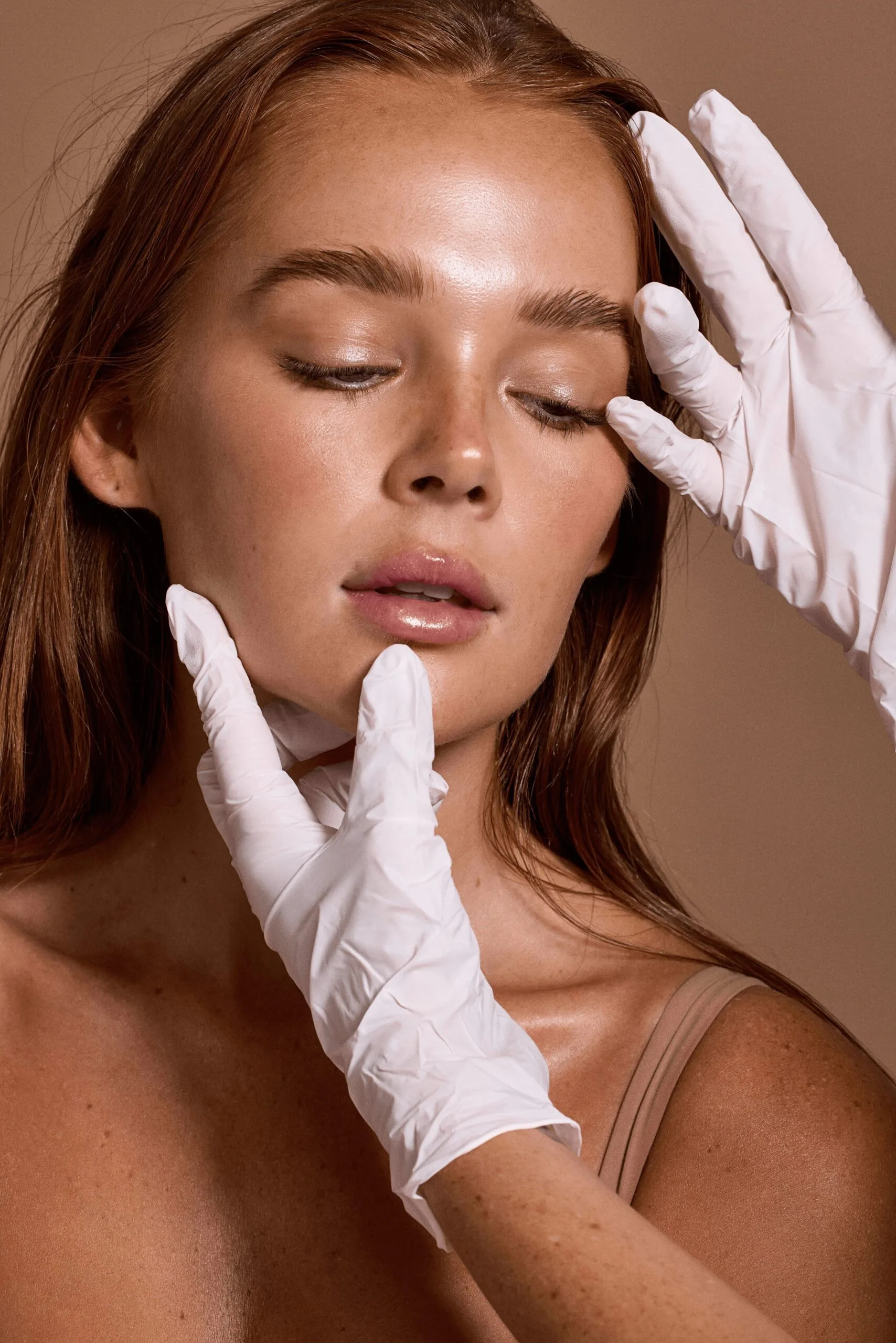
Isotretinoin does not have to put your skin care on hold. With a barrier-first approach and careful assessment, some in-clinic treatments can support your skin through it.
Part Two of our Two part series · Written by Belinda, Senior Dermal Clinician & Head of Dermal
In Part 1, we looked at how isotretinoin works, why it can change the behaviour of the skin and why supporting the skin barrier is so important throughout treatment.
But one of the biggest questions we hear from patients taking Accutane is:
"Can I still have skin treatments?"
For many years, the answer was generally assumed to be no.
Patients taking isotretinoin were routinely advised to postpone a broad range of cosmetic procedures because of concerns around impaired wound healing, scarring and abnormal responses to treatment.
However, our understanding has evolved.
More recent literature suggests there is insufficient evidence to routinely delay certain procedures, including superficial chemical peels and some light and laser treatments, simply because a patient is taking isotretinoin.
But this does not mean every treatment is appropriate for every isotretinoin patient.
There is an important difference between a superficial, non-invasive or minimally invasive treatment and an aggressive resurfacing procedure.
Treatment depth, energy, dosage, technique, skin type, pigmentation risk, current barrier health and the individual's response all matter.
This is why at Plump, we don't take an "all or nothing" approach.
Instead, we assess the patient in front of us.
The Plump approach: barrier first
Not every patient taking isotretinoin has the same dose.
Not every patient experiences the same side effects.
Not every patient has the same acne severity, skin type, pigmentation risk or barrier health.
So why would every patient receive the same treatment?
Our treatment selection is based on:
- Your current medication and dosage
- Your skin condition
- Your barrier integrity
- Your acne activity
- Your skin type and pigmentation risk
- Your treatment history
- Your current skincare routine
- Your goals
- The type and intensity of treatment being considered
Sometimes the right treatment is a treatment.
Sometimes the right treatment is simply barrier support.
And sometimes, the right decision is to wait.
Barrier-focused treatments at Plump
When your skin is dry, sensitised or inflamed, sometimes the best treatment is one that supports rather than stimulates.
The Plump Barrier Repair Facial is a gentle, barrier-focused treatment designed to calm inflammation, replenish hydration and support healthier, more resilient skin.
The treatment combines a thorough cleanse and gentle exfoliation with LED light therapy, followed by our Hydra-Intensive Cooling Masque and facial massage.
It can be particularly useful for patients experiencing the dryness, sensitivity or inflammation that can accompany oral isotretinoin, providing skin support without relying on aggressive exfoliation or resurfacing.
The goal isn't to overwhelm the skin.
It's to calm, hydrate and support it while allowing your medical treatment to do its job.
Oxygen Reset Facial
The Oxygen Facial is an innovative skin treatment designed to rejuvenate, revitalise and support healthier-looking skin.
It combines Societe's scientifically formulated peptides and antioxidants with oxygen therapy to help strengthen, correct and support the skin.
The treatment begins with a deep thermal cleanse, followed by a unique two-step oxygenation process designed to increase the delivery of pure oxygen to the skin.
This is followed by a calming gel peptide mask containing plant-based stem cells and targeted anti-ageing ingredients to deeply hydrate and soothe the skin.
The Oxygen Facial is a versatile treatment that can be incorporated into the management of acne, pigmentation, and compromised or inflamed skin.
For patients undergoing medical acne treatment, it can provide a supportive treatment option alongside their prescribed care while helping to maintain skin comfort and hydration.
As always, treatment selection is guided by the condition of the skin on the day.
Superficial Chemical Peels
Chemical peels have historically been one of the treatments patients were told to avoid while taking isotretinoin.
However, the evidence has evolved.
Research has reported the use of superficial chemical peels alongside oral isotretinoin, and more recent literature does not support routinely delaying superficial peels solely because a patient is taking isotretinoin.
Importantly, superficial means superficial.
We aren't talking about aggressive medium-depth or deep resurfacing.
At Plump, a Level 1 superficial peel may be considered where the skin barrier is sufficiently healthy and there is a clear clinical reason for treatment.
Depending on the individual, this may help address concerns such as:
The peel, concentration, contact time and frequency are selected according to the individual.
More isn't necessarily better, particularly when your skin is already being altered by medication.
Light-based treatments can also have a role for selected patients with active acne and the redness that can remain after acne has settled.
IPL uses specific wavelengths of light to target chromophores within the skin. Depending on the filter and treatment parameters, this can allow us to target aspects of inflammation and vascular redness.
At Plump, IPL may be considered for concerns including:
Research into combining isotretinoin with light-based treatments is continuing, with studies reporting improvements in inflammatory acne when light-based treatment is used alongside isotretinoin.
Again, this isn't a blanket recommendation.
The fact that a treatment can be performed during isotretinoin doesn't mean that it should be performed on every isotretinoin patient.
Patient selection and treatment parameters matter.
Looking beyond the active acne
Treating acne isn't just about stopping new breakouts.
Once inflammation settles, patients may be left with:
- Persistent redness
- Pigmentation
- Uneven texture
- Atrophic scarring
- Post-inflammatory changes
Historically, the approach was often to simply wait until isotretinoin was finished before considering any procedural treatment.
Today, there is greater discussion around introducing selected adjunctive treatments earlier in the acne journey, particularly where the treatment is appropriate to the patient's skin and does not unnecessarily compromise the barrier.
That doesn't mean aggressive scar resurfacing should automatically be performed while taking isotretinoin.
It means we can start thinking about the whole skin journey, rather than treating active acne and its consequences as completely separate problems.
Complementing, not replacing, medical care
At Plump, we don't see medical and dermal treatment as competing approaches.
They can work alongside one another.
Your prescribing doctor or dermatologist manages the medical treatment of your acne.
Our role as dermal clinicians is to assess and support the skin itself, helping manage barrier health, inflammation, hydration, pigmentation, redness and the visible consequences of acne.
This may mean:
Medical treatment + targeted skincare
Medical treatment + LED
Medical treatment + supportive facial treatments
Medical treatment + selected superficial peels
Medical treatment + selected light-based treatments
The combination will look different for every patient.
Your skin doesn't have to go on hold
Isotretinoin can be an incredibly valuable part of an acne treatment plan.
But treating the underlying condition doesn't mean we should forget about the skin experiencing the treatment.
Your skin still needs to be cleansed, hydrated, protected and supported.
And in selected patients, it may also benefit from carefully considered professional treatments during the medication journey.
At Plump, our approach is simple:
Assess first.
Treat appropriately.
Protect the barrier.
Support the medical plan.
Because treating acne isn't simply about clearing the breakout.
It's about supporting your skin through the entire journey and helping you arrive at the other side with skin that is healthy, supported and resilient.
Taking isotretinoin and wondering what your skin can have?
Book a skin consultation. We assess your barrier and your skin on the day, then recommend what is appropriate now and what is better left until later.
Read next
Accutane and your skin. Part One of our series: why your skin still needs care during isotretinoin treatment.
Acne and congestion. How we assess and treat persistent breakouts.
Red marks after a breakout. Understanding post-inflammatory erythema (PIE).
This blog is general information only and is not a substitute for individual advice. All treatments require a consultation to assess suitability. Individual results vary.